Everything you are quoted comes out of the catalogue that bills you
Orun sells cloud servers, object storage and shared cPanel hosting. The plan, its CPU, memory, storage and transfer, and the price in force today are one record an operator maintains — and the pricing page, the cart, the invoice and the server that gets built all read that same record. There is no second set of numbers written for a sales page.
Plans, specifications and prices read fresh on every page load
Your cart holds the price you were quoted for 30 minutes
The server, its subscription and its invoices stay one linked record
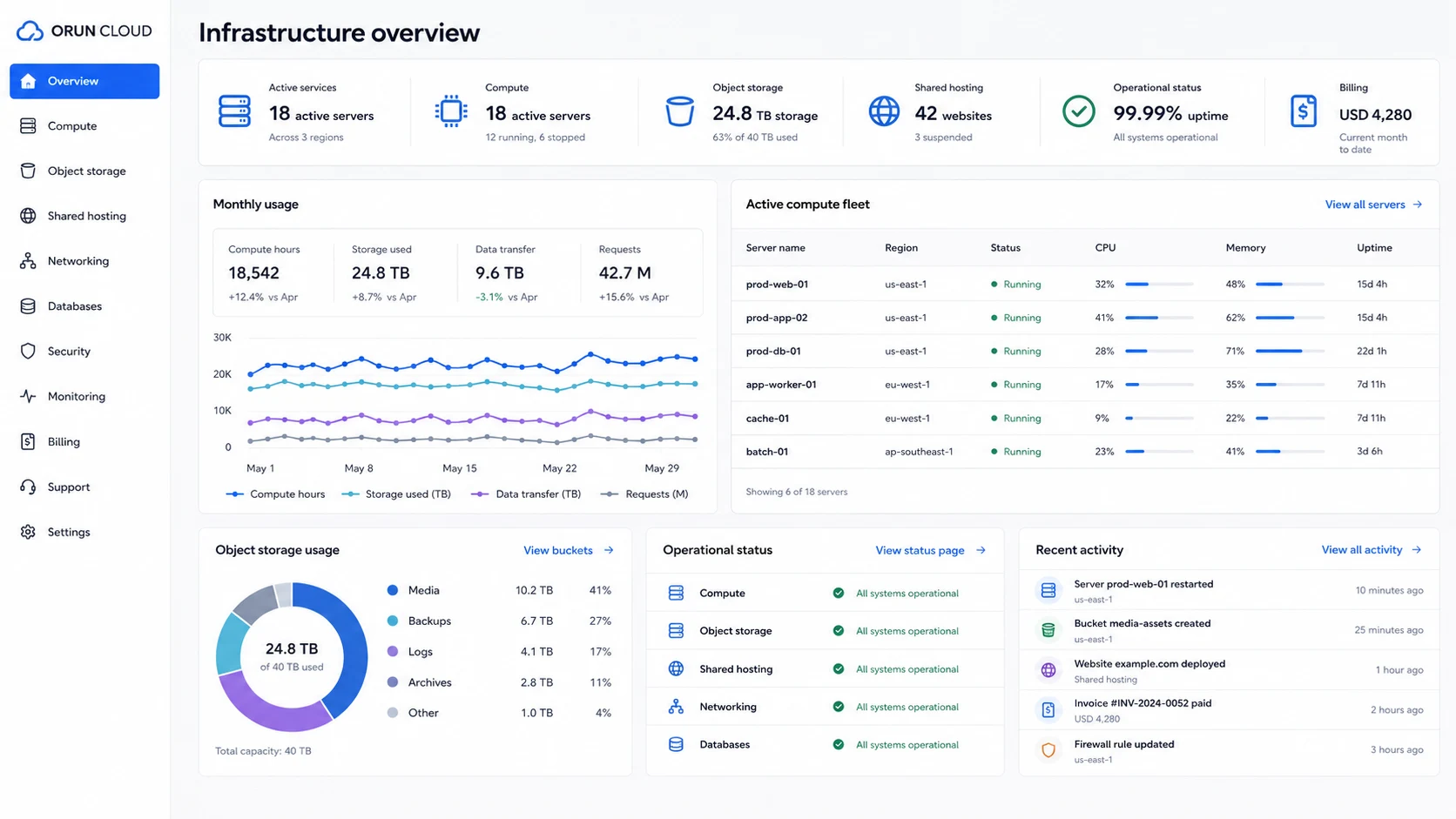
Built on infrastructure you already know
Four integrations do the work, and every one of them is implemented in this platform. There are no others, and nothing here is a logo we borrowed.
DigitalOcean
Cloud servers and S3-compatible buckets are created through the DigitalOcean API, and every resize, rebuild, snapshot and backup switch you press goes the same way.
Cloud VPScPanel & WHM
Shared hosting accounts are created on a WHM server, and the portal opens a signed cPanel session for you — one click, no second password to keep track of.
Shared HostingPaystack & bank transfer
Card payments settle through Paystack. Paying by bank transfer instead? Submit it with your proof against the invoice it pays, and a person approves it before it settles.
See pricingA versioned REST API
/api/v1 covers servers and their snapshots, projects, organizations, support tickets, monitoring reads and read-only billing. Personal access tokens carry 12 scopes, so a token can be issued for exactly one job.
Create an accountFrom the order to the day you leave
The whole lifecycle, in the order you will meet it. Every step below is something the platform does today.
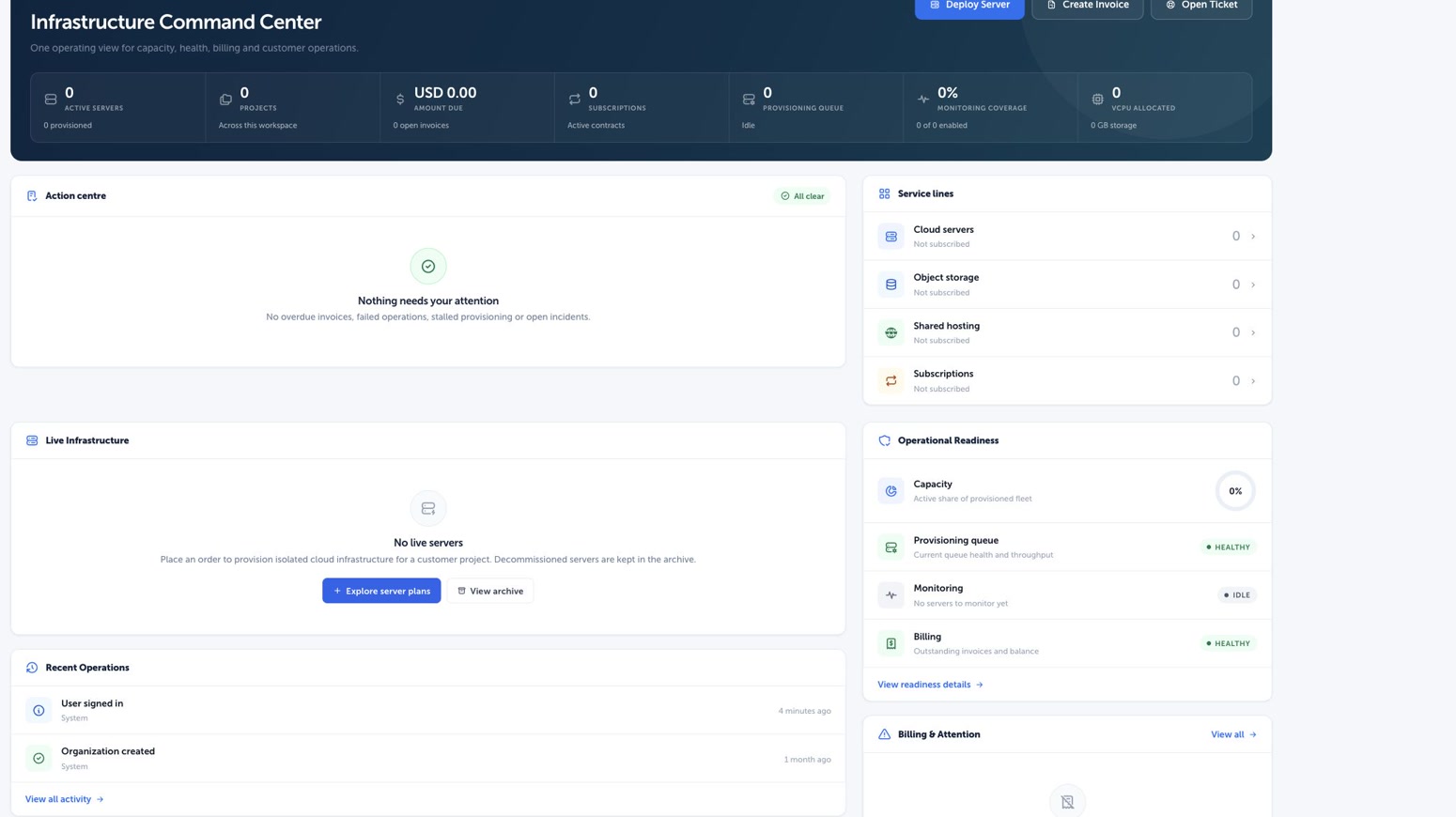
Pick a plan, lock the price, get an invoice
The plan you choose carries the price in force today, and your cart holds it for 30 minutes while you decide. The order becomes an invoice due 7 days after it is issued, and a verified payment turns it into a subscription.
Quoted in USD, GHS — the currencies carrying a live price
Pay by card through Paystack, or by bank transfer with proof attached
Orders, invoices, subscriptions and your wallet sit in the same account
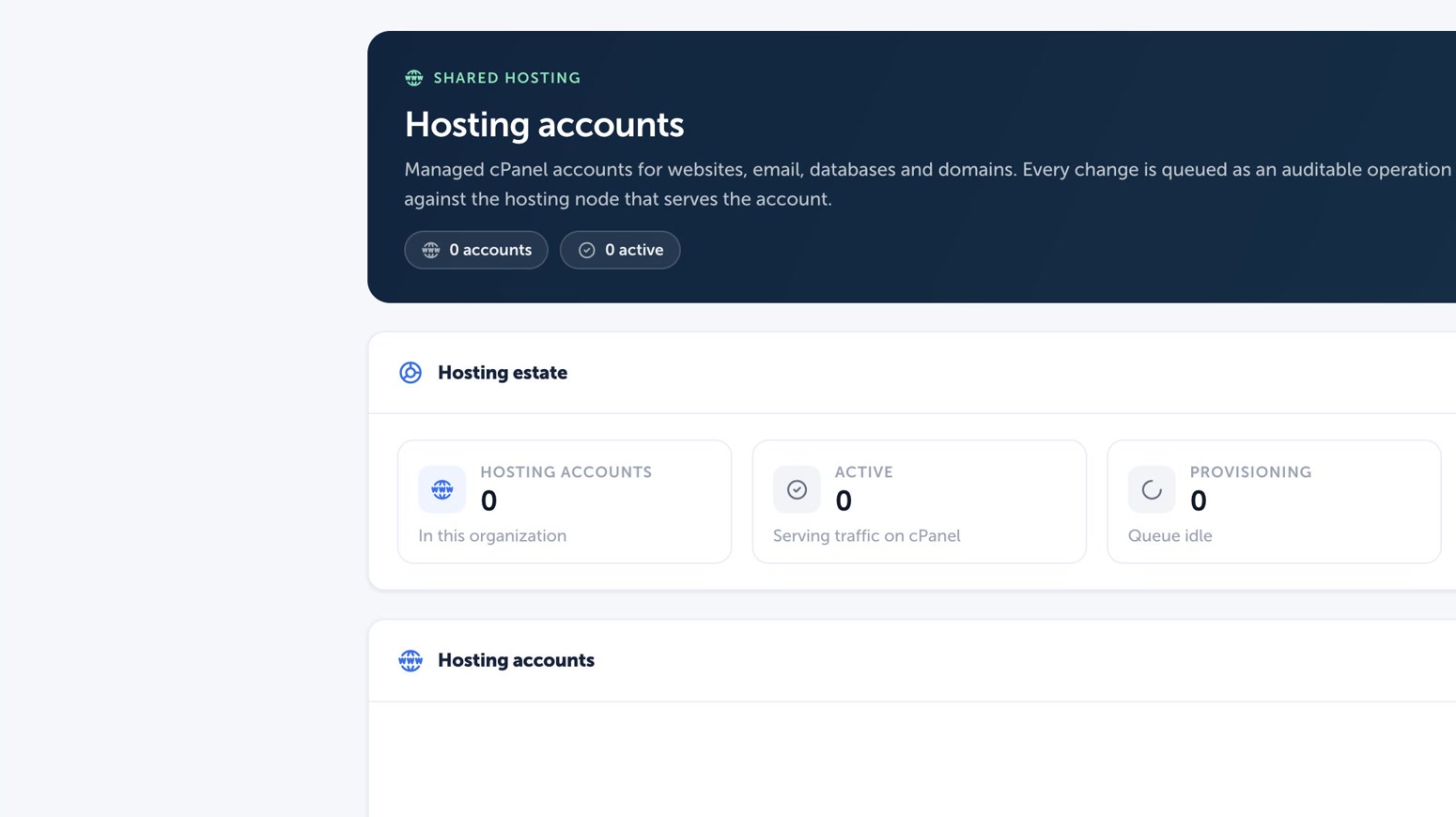
The payment builds the service, and you watch it happen
A settled payment queues a provisioning request that runs as recorded steps against the provider API, with every attempt logged. A failure that can be retried is retried for you; after 5 attempts it stops and goes to a person instead of looping quietly.
The same steps show on the service's own progress page
Servers and buckets built on DigitalOcean, hosting accounts on WHM
Reconciliation re-checks the provider against our records on a schedule
12 server operations, in your hands
Power on, power off, shutdown, reboot, rename, rebuild, resize, snapshot, backups, password reset and cancellation — run from the portal or from the REST API. 4 of them are marked destructive and need a separate permission, so not everyone in your organization can fire them.
SSH keys, snapshots and plan changes from the same screen
Monitoring with alert rules, incidents, synthetic checks, maintenance windows and log sources
Buckets browsed, uploaded to and CDN-switched without an S3 client; cPanel opened in one click
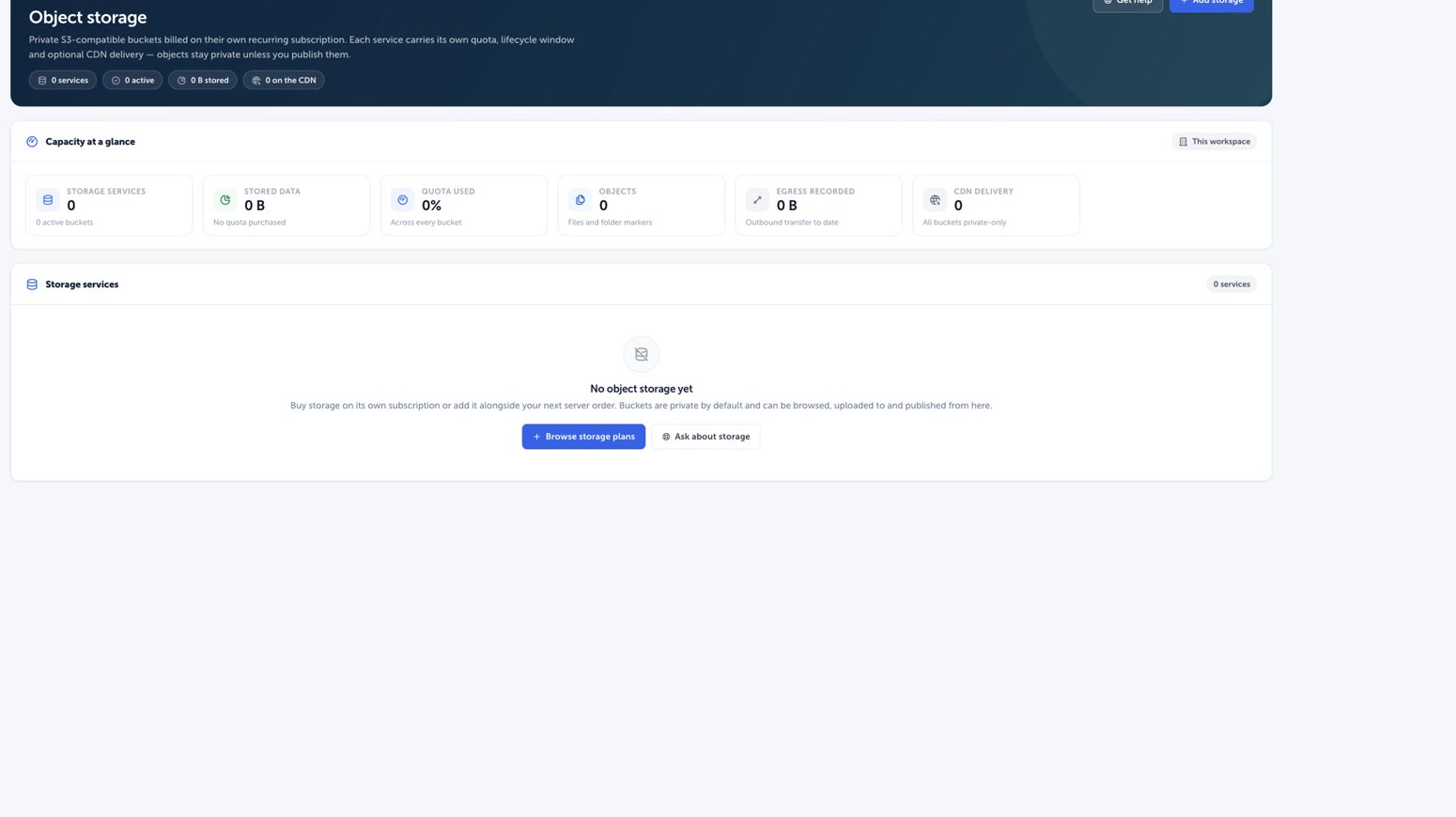
Renewal and cancellation, stated before you buy
A renewal invoice is issued 7 days before the current term ends and falls due when the new term starts. Past due you get reminders; 7 days past due the subscription becomes eligible for suspension, which powers the server off rather than deleting anything — and paying reactivates it.
Cancel and the service stays reachable for 7 days so you can take your data
Support can still restore it for a further 14 days after that
Upgrades are invoiced pro rata for the rest of the term; downgrades take effect at the end of it
The dates you can plan around
Read from this deployment's own configuration as the page loads — the same values the billing and provisioning code acts on, not numbers written for a sales page.
You decide who gets in, and what they are allowed to touch
An account is an organization, not a single login. Bring your team in, give each person a role, and keep the destructive operations behind a permission of their own.
Organizations, roles and projects
Invite members, give them roles, group services into projects, and hand ownership over when the person who signed up moves on.
Sign-in you can see into
Turn on an authenticator app with single-use recovery codes. The portal lists your trusted devices and active sessions, and you can end any of them.
12 token scopes
Personal access tokens are issued and revoked from your own profile, each limited to the abilities you tick and expiring on a date you set.
Your data stays yours
Ask for an export of your personal data, or its erasure, from your profile. No ticket to raise and nobody to persuade.
Straight answers, before you spend anything
Every answer below is how the platform behaves today. If yours is not here, [email protected] reaches a person.
Cloud servers, object storage and shared cPanel hosting. Which plans exist, in which currencies and on which billing terms, is whatever an operator has published in the catalogue — and the pricing and service pages read it at the moment you load them. A product nobody has published simply does not appear, rather than appearing and failing at checkout.
A cart becomes an order, the order is invoiced, and a verified payment turns the order into a subscription and queues a provisioning request. That request runs as recorded steps against the provider API, each attempt logged. A failure that can be retried is retried automatically; after 5 attempts it stops and is handed to a human instead of looping. You watch the same steps from the service's progress page.
On a server: power on, power off, shutdown, reboot, rename, rebuild, resize, snapshot, backups, password reset and cancellation — 12 operations in all — plus SSH keys, plan changes (an upgrade invoiced pro rata for the rest of the term, a downgrade scheduled for the end of it), and monitoring with alert rules, incidents, synthetic checks, maintenance windows and log sources. On object storage: buckets, folders, uploads, expiring download links and a CDN switch. On shared hosting: a cPanel session opened from the portal and a password reset. Tickets, invoices and subscriptions sit in the same account.
A first invoice falls due 7 days after it is issued; a renewal invoice is issued 7 days before the current term ends and falls due when the new term starts. Past due, you get reminders; 7 days past due the subscription becomes eligible for suspension, which powers the server off — or suspends the hosting account — rather than deleting anything, and paying reactivates it. Cancel and the service stays reachable for 7 days so you can take your data, then it is powered off and hidden, restorable by support for another 14 days, and only then permanently deleted.
An account belongs to an organization: you invite members, give them roles, group services into projects and can transfer ownership. Sign-in supports an authenticator app with single-use recovery codes, and the portal lists your trusted devices and active sessions so you can end any of them. API tokens are issued and revoked from the same place, each carrying only the abilities you tick from the 12 available. You can request an export of your personal data, or its erasure, from your profile.

Open an account and hold us to it
Nothing above was written for a brochure. Every figure here is a setting the billing and cancellation code reads.
USD 10.00a month
The cheapest plan the catalogue is carrying todayYour cart holds its price for 30 minutes
Invoices fall due 7 days after they are issued
Renewals invoiced 7 days before the term ends
Cancel and keep access for 7 days
Nothing is charged until you place an order, and every policy above is published in full. Sales is at [email protected].